

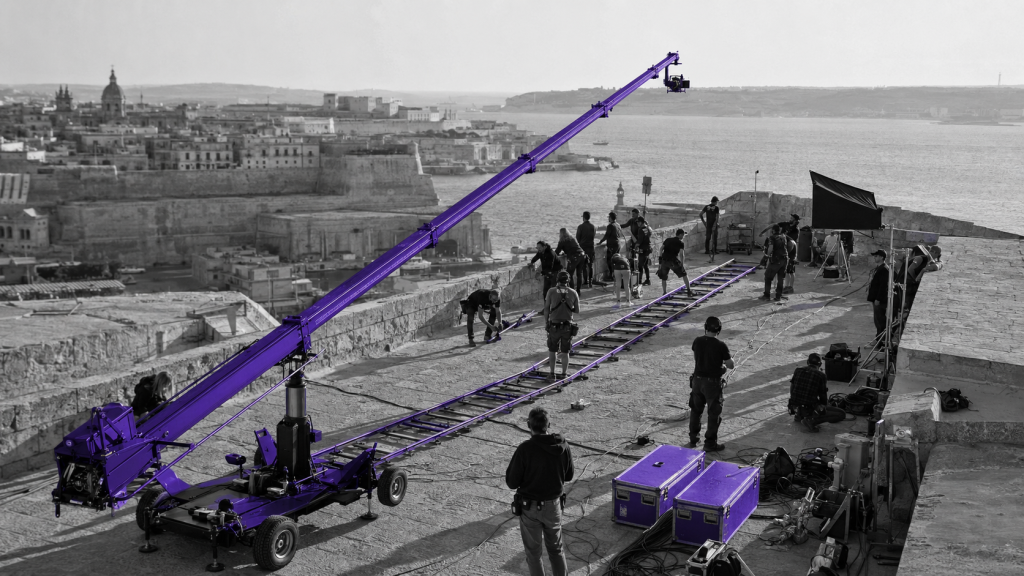
Malta’s film cash rebate reimburses up to 40 percent of what a production spends on the island, and 50 percent for a narrow class of low-budget local works. For an independent producer building a finance plan, that is real money on the table. But the scheme rewards specific choices, carries hard caps, and pays only after a full audit. Knowing how it actually works decides whether Malta strengthens your budget or just complicates it.
How much you actually get back
The headline figure is 40 percent, but it is built in layers. For live action work, including any VFX, animation, virtual production and post carried out alongside it, the rebate is 30 percent on all eligible Malta expenditure. On top of that, the Film Commissioner can award two discretionary bonuses of 5 percent each: one when Malta plays itself or the production uses local facilities, one for maximising local resources. Together that reaches 40 percent.
For animation, VFX or virtual production with no live action, the base is 25 percent, with up to 15 percent added at the Commissioner’s discretion, again capping at 40 percent. A production recognised as a Difficult Audiovisual Work can reach 50 percent, but that status is restrictive: low budget under 1.5 million euros, sole original version in Maltese, and the first or second work of a director. For most international producers, 40 percent is the real ceiling.
Who and what qualifies
Two thresholds gate the scheme. The production must spend at least 100,000 euros in Malta, and the overall budget must exceed 200,000 euros. Below that, there is no rebate. The work also has to pass a cultural test, scoring a minimum of 40 points.
Eligible formats are feature films, television or VOD/SVOD films and series, creative documentaries, and short films, all processed to commercial release standards for theatrical, broadcast or streaming distribution. Content made for social platforms such as YouTube or TikTok is excluded. The applicant must be the qualifying company, meaning the entity that holds the rights and chain of title and is responsible for the whole production.
A foreign producer cannot apply alone. You must engage an Opportunity for All registered production service company to act as production coordinator for live action, or a registered studio for VFX, animation, virtual production or post. Local crew requirements are steep in several departments, reaching 90 percent in construction, locations, marine and transport.
The feature that matters most for financing
The rebate is guaranteed by the Maltese Government, and that guarantee can serve as collateral to raise funds through your banking system. This is the point most summaries bury. It means the rebate is not only money you recover at the end, it is an asset you can borrow against during production, the same way producers cash-flow tax credits in other territories. For an independent film that is often short on liquidity, that changes what the incentive is worth.
The caps you need to plan around
Above-the-line costs, meaning directors, producers excluding the line producer, cast and stunts, are capped at whichever is lower: 1 million euros, or 30 percent of total eligible Malta spend, and never above actual ATL costs. The total cash rebate on ATL spend will not exceed 5 million euros. A local co-producer or production service company fee is capped at 100,000 euros or 20 percent of the final Malta spend, whichever is lower. Professional services are capped at 100,000 euros in total. Development costs, financing costs, marketing and VAT are not eligible at all.
The timeline from application to payment
Apply at least 30 working days before principal photography or the start of animation, VFX or virtual production in Malta. Applications filed after work has begun are not considered. The Commissioner issues a provisional certificate within 30 working days of a complete application. Once works commence, you can draw an advance grant of 10 percent of the rebate, and lengthy shoots can request interim claims.
Final submission is due within 12 months of completion in Malta, and it requires a full audit of your Malta spend, cross-referenced line by line. After a clean final submission, the rebate is paid within five months. The audit itself costs 0.5 percent of eligible spend, with a floor of 5,000 euros and a ceiling of 30,000 euros, deducted from the final payment.
How cast and crew are taxed
Malta sets favourable rates for non-residents working on the production. Non-resident actors and front-of-camera performers are taxed at 10 percent on their Malta-allocable income. Non-resident crew, including producers and directors, sit at 15 percent, with directors at 10 percent. Crew on a local payroll for fewer than 183 days can be exempt from Maltese social contributions with the relevant A1 certificate. These rates, read against the relevant double taxation treaty, affect what talent nets and what you budget.
What the rebate does not do
The rebate reimburses eligible Malta spend after the fact. It is one block in a finance plan, not the plan itself. The scheme is explicit about this: aid intensity is capped at 80 percent of the overall budget, and the standard state-aid ceiling is 50 percent of the production budget, rising to 60 percent for genuine cross-border co-productions funded by more than one Member State. In other words, Malta is designed to sit alongside co-production and other financing, not to replace it.
That is the structural point for an independent producer. To reach the full budget, the balance has to come from pre-sales, co-production partners and distribution commitments, and the film must be processed to standards for international release in the first place. Malta rewards the producer who already has international partners engaged, and pays less to the one who does not. World Media Match connects producers, distributors and broadcasters worldwide, so the co-production and pre-sale relationships that make an incentive like Malta’s usable are reachable while the finance plan is still being built.
See how it works at worldmediamatch.com.
Source: Screen Malta, Film & TV Financial Incentives Guidelines, Malta Film Commission, June 2024. Scheme sunset date 29 October 2028. Figures are indicative; confirm current terms with the Malta Film Commission before budgeting.