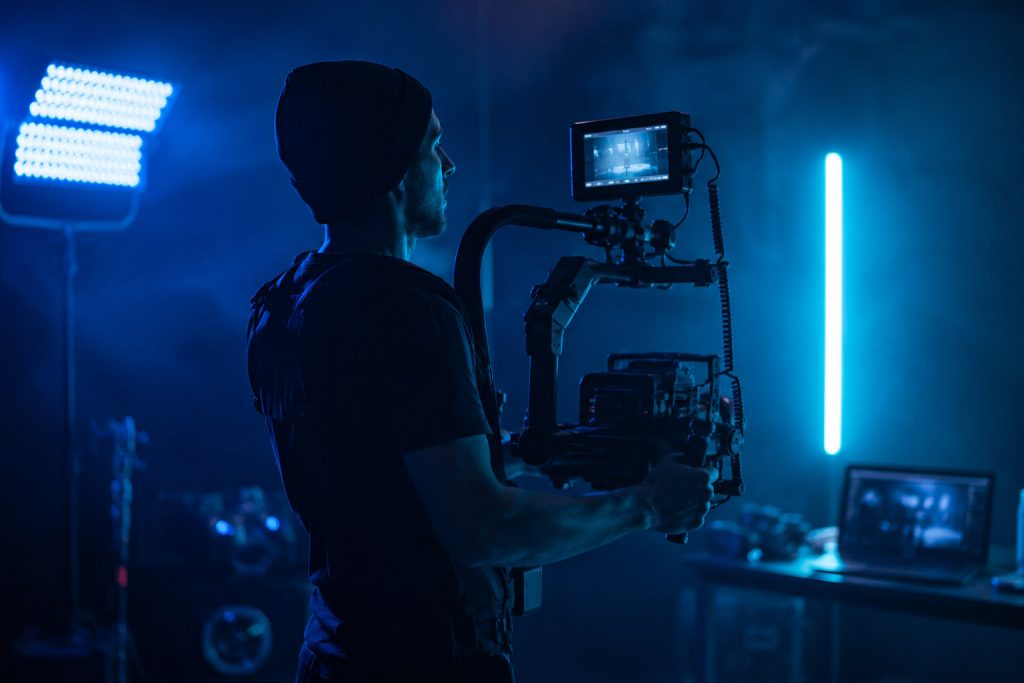


For a century, the deal between brands and content was simple. Content drew a crowd, brands rented space next to it, and everyone knew which was which. That deal is breaking down. Audiences skip, block and scroll past the rented space, and the brands with the deepest pockets have started doing something else entirely: paying for the content itself, and increasingly owning a piece of it. For a producer facing tighter commissioning budgets, fewer streamer originals in many markets and a harder pre-sale environment, this is not only a marketing story. It is another potential source of financing.
Why brands are moving from ad space to content
The money is following attention out of the ad break and into the program. The branded entertainment market was valued at 25.4 billion dollars in 2025 and is projected to reach 47.9 billion by 2034, a compound growth rate near 8 percent, according to MarketIntelo, with North America holding about 35 percent of it. The wider branded content services market, per Mordor Intelligence, was 81.16 billion dollars in 2025 and is projected at 90.35 billion in 2026, growing near 11 percent a year. In the US, the IAB projects creator economy ad spend rising from 37.1 billion dollars in 2025 to 43.9 billion in 2026, a marker of how fast brand budgets are shifting toward content, though it covers creator advertising broadly rather than long-form film and TV financing specifically.
Two forces drive this. As audiences increasingly skip, block or ignore conventional ad formats, brands are putting more budget into content-led formats built to earn attention rather than interrupt it. And a brand that funds content builds an asset it can reuse, license and extend, rather than an impression that vanishes when the campaign ends. That second point is what turns a marketing budget into something a producer can treat as financing.
What a brand actually buys when it funds a show
This is the part producers most often get wrong. A brand co-financing a program is not buying a logo in the corner of the frame. Depending on the deal, it can be buying several distinct things: association with a story and an audience, a share of the IP and its future revenue, a first or exclusive window, category exclusivity that keeps competitors out, or audience insights, campaign data and first-party data opportunities, depending on the distribution model and applicable privacy rules. A broadcaster or platform finances or licenses content mainly for its programming and distribution value. A brand often has an additional motive: connecting the content to the value of its own brand, audience, products or IP.
That difference is the opening. A broadcaster asks first whether the show fits its schedule and its audience. A brand asks whether the show raises the value of what it already owns, its identity, its audience, its category position. A producer who can answer that second question has something a broadcaster conversation rarely offers: potentially a partner whose interest extends across the life of the IP rather than ending at delivery.
The spectrum of brand involvement
Brand money enters content at very different depths, and the depth decides how much financing and how much constraint comes with it.
Integration and sponsorship
The lightest form, and the oldest. A brand pays to appear or to attach its name. Product placement is still the largest single format in branded entertainment, about a third of the market per MarketIntelo. It brings cash but no shared upside, and little editorial weight for the producer to manage.
Co-financing a slice
The brand funds a defined share of a season or production, in exchange for association, exclusivity and sometimes a first window. The deal can be structured so the producer retains the underlying IP while granting the brand defined association, exclusivity or exploitation rights. This is the layer most useful to independent producers, because it plugs a real gap in a finance plan without surrendering ownership.
Co-production with an IP stake
The brand invests as a partner and takes participation in the IP and its future revenue. The incentive aligns: the brand now wants the program to travel and last, because its return depends on it. This is where a brand stops behaving like an advertiser and starts behaving like a producer.
Brand as owner and studio
The heaviest forms show where this leads. After the over 1.4 billion dollar box office of Barbie in 2023, Mattel combined its film and television divisions into Mattel Studios in June 2025, and has said sixteen films were in active production or development with major studio partners. Tellingly, Mattel does not fund these alone: it supplies the IP and the audience while partners supply capital and reach, with Amazon MGM distributing the theatrical Masters of the Universe in the US and Sony internationally, and Apple Original Films, Skydance Media and Mattel Studios behind Matchbox The Movie, set to premiere globally on Apple TV on October 9, 2026. The results also show the risk at this depth. Masters of the Universe grossed about 114 million dollars worldwide on its June 2026 release, a theatrical run that fell well short of its reported 170 million dollar budget, before moving to Prime Video in July. Red Bull sits at the other end of the spectrum. Since founding Red Bull Media House in 2007, the company has built a full multi-platform media operation that develops, produces, distributes and licenses content across television, streaming, digital and film. A brand at this depth is no longer funding content, it is a media company.
How a producer approaches a brand
The instinct is to pitch a brand the way you pitch a broadcaster, leading with the project and asking it to sponsor. That rarely works, because it frames the brand as a cheque rather than a partner. The approach that works starts from the brand’s side: what does this program let the brand own, reach or become that it cannot buy with a normal media plan?
Concretely, that means bringing a format that raises the value of what the brand already holds, its universe, its community, its category, and proposing participation rather than sponsorship. It means arriving with the audience fit demonstrated, not asserted. And it means being specific about which of the things above the brand is buying, so the deal is a co-production term sheet, not a logo placement. A producer who does this changes position: no longer a supplier waiting for a commission, but the party who creates a new layer of value around a brand’s existing assets.
The discipline it takes
None of this works if the program becomes an advertisement. The branded content that travels and lasts is the content audiences would choose regardless of who paid for it, which is precisely why brands value it. For content meant to travel beyond a brand’s own channels, protecting enough editorial independence to keep audience credibility is often critical, and the degree of brand control should be set contractually. Brand selection should be driven by genuine fit between the story and the brand’s universe rather than by whoever offers the most money. A poor fit can quickly make the commercial relationship visible in a way that weakens the credibility of both the content and the brand. The producer’s judgment about which brands belong near which stories is part of what they bring to the table, and it should be priced accordingly.
Where WMM comes in
The structural point for an independent producer is that brands can increasingly be approached as a class of potential financier, rather than only as advertisers or sponsors, and that this is happening while commissions and pre-sales tighten in many markets. But brands are hard to reach for a producer without the right relationships, and hard to structure a deal with for a producer who has only ever sold to broadcasters.
This is one of World Media Match’s short-term priorities: building a network of brands ready to co-finance IP this way, alongside the producers, distributors and broadcasters the platform already connects. A producer with the right project should be able to reach a brand whose universe fits it, while the finance plan is still open, and structure a partnership rather than a placement. World Media Match connects producers, distributors and broadcasters worldwide to move finished and in-development projects across borders, and is extending that network to the brands that increasingly want a stake in the content itself.
See how it works at worldmediamatch.com.
Figures: MarketIntelo and Mordor Intelligence (branded entertainment and branded content markets); IAB (US creator economy ad spend); box-office and corporate data on Barbie, Mattel Studios, Masters of the Universe, Matchbox and Red Bull Media House from public filings, Box Office Mojo, The Numbers and industry reporting. Market figures are indicative and evolve; verify before relying on them.